
Sunday, April 19, 2020
Songs of Notre Dame: A Lenten Offering
For Lent this year, my team and I produced a musical series, Songs of Notre Dame: A Lenten Offering, where we shared music from the various Notre Dame choirs and ensembles with music that helped people pray during Lent through the Octave of Easter. It was very well received, so much so that our audience wanted us to keep sharing songs far beyond the season! We will likely revisit the genre of outreach in the future, but feel free to enjoy the many musical selections that were part of this campaign.

Thursday, January 2, 2020
Advent 2019: Sacred Places of Notre Dame

For Advent 2019, I helped lead a project called Sacred Places of Notre Dame: A Daily Advent Journey, available at sacredplaces.nd.edu. Each day, we highlighted a different people from the Notre Dame family, sharing stories about why certain places on campus were sacred to them. These brief but moving videos allowed people to pray each day of the Advent season, and we received many compliments of gratitude from so many viewers.
Thursday, July 11, 2019
Retirement Reflection
Here is a reflection I wrote for the Notre Dame Alumni Association's Daily Gospel Reflection, located at faith.nd.edu.
Gospel: Matthew 19: 27-29
Then Peter said in reply, “Look, we have left everything and followed you. What then will we have?” Jesus said to them, “Truly I tell you, at the renewal of all things, when the Son of Man is seated on the throne of his glory, you who have followed me will also sit on twelve thrones, judging the twelve tribes of Israel. And everyone who has left houses or brothers or sisters or father or mother or children or fields, for my name’s sake, will receive a hundredfold, and will inherit eternal life."
Reflection
401k. IRA. Social Security. Roth. Pension. Invest. Save. For many of us, a constant drumbeat of professional life and financial advising seems to center around saving for retirement. There are projections about how much we want to be able to spend in retirement and about how long we will live. The most dreaded question about the whole conversation seems to be, “Will I have enough to retire?” And while sound financial planning and saving for the future are laudable goals, I sometimes wonder if we can too easily lose sight of an even more important return on our investment.
Today’s Gospel for the Feast of St. Benedict has Peter reminding Jesus about how much the disciples have given to follow the Lord. Peter, like us, sees things from a limited view regarding the cost of discipleship here and now. Conversely, Jesus provides an eternal perspective and promises that all that we have sacrificed here for him will come back to us a hundredfold and lead to everlasting happiness in heaven.
St. Benedict and countless others who have given their lives to monastic life have heeded this advice well, knowing that in offering their lives to Christ, they will receive back more than they could have ever produced alone. They inspire all of us, even if we are not called to this sort of life, to think about the sacrifices and gifts to God and others we could make. After all, a small gift in the hands of God can become something truly powerful.
So instead of only focusing on if we will have enough to retire, I would suggest another question worthy of consideration: will I inherit eternal life? This is the return on the investment of our time, efforts, and finances that matters most. For no matter how well we have planned for retirement, bodily death is inescapable. Instead of letting that thought fill us with fear, however, we live in trusting hope that the words of Jesus will come true and that by giving our lives over to him, we will receive an eternal reward.
Sunday, March 17, 2019
Holy Land Pilgrimage Traveler's Journal
I had the blessing of accompanying a group from the Notre Dame Alumni Association on a pilgrimage to begin Lent in 2019. As a part of that outreach I wrote a number of entries in a public traveler's journal:
From the sacred places to my fellow pilgrims, it was one of the most meaningful spiritual experiences of my life!
Tuesday, December 25, 2018
Chapels of Notre Dame

For Advent, I helped lead a project called Chapels of Notre Dame: A Daily Advent Journey. These brief but moving videos allowed people to pray each day of the Advent season in a different chapel on campus. See the collection at chapelsof.nd.edu. To see our videos from 2017 in a similar vein, visit advent17.nd.edu.
Thursday, August 30, 2018
Abuse Crisis Reflection
Gospel: Matthew 23:13-22
Jesus said to the crowds and to his disciples:
"Woe to you, scribes and Pharisees, you hypocrites.
You lock the Kingdom of heaven before men.
You do not enter yourselves,
nor do you allow entrance to those trying to enter.
"Woe to you, scribes and Pharisees, you hypocrites.
You traverse sea and land to make one convert,
and when that happens you make him a child of Gehenna
twice as much as yourselves.
"Woe to you, blind guides, who say,
'If one swears by the temple, it means nothing,
but if one swears by the gold of the temple, one is obligated.'
Blind fools, which is greater, the gold,
or the temple that made the gold sacred?
And you say, 'If one swears by the altar, it means nothing,
but if one swears by the gift on the altar, one is obligated.'
You blind ones, which is greater, the gift,
or the altar that makes the gift sacred?
One who swears by the altar swears by it and all that is upon it;
one who swears by the temple swears by it
and by him who dwells in it;
one who swears by heaven swears by the throne of God
and by him who is seated on it."
Reflection
It is a certain rite of passage as children when we encounter the sinful or at least human side of those who serve as our mentors. I can vividly recall scenes when family members and spiritual leaders fell from the pedestals where I had placed them in my mind’s eye. We then begin to understand St. Paul’s message to the Romans that “all have sinned and are deprived of the glory of God” (Romans 3:23). Nevertheless, these are sometimes painful events that, depending on their severity, can present trials to our faith.
I cannot help but read today’s gospel passage without bringing to mind the most recent round of scandals that have plagued the Catholic Church. We weep bitterly with the victims of the abuse carried out by those who were entrusted with their spiritual care, and we cry in disbelief that something so sinister could have gone on hidden for so long. The betrayal is deep, especially because, like the Pharisees in the gospel, these are the leaders who are ordained to protect us from evil and spiritual harm.
We are left wondering what we can do to help, knowing we cannot undo the wrongs of the past or exercise complete control of the future. During my prayer with this gospel, I thought about the following themes that I would offer. We must, first and foremost, pray for the Church without abandoning it. So much contrition, forgiveness, and healing must take place, and our prayers and presence can only help facilitate that. Secondly, we can lend our support to appropriate and ongoing reforms to ensure that the most vulnerable are protected without question, any future abuses are snuffed out without delay, and transparency is the norm. I think it is also important for us to search our own hearts, guard against our own inclinations to sin, and seek forgiveness from those we have wronged. No one is exempt from temptation or the depths to which the human heart can move towards evil, and individuals earnestly seeking holiness is a tremendous means of redirecting our culture.
Finally, I would suggest that we recall that ultimately, we are followers of Jesus Christ and no one else. We commit ourselves to the one who was without sin and who can be our refuge and ultimate source of hope in times such as these.
Monday, March 19, 2018
Journey Through Lent with Art
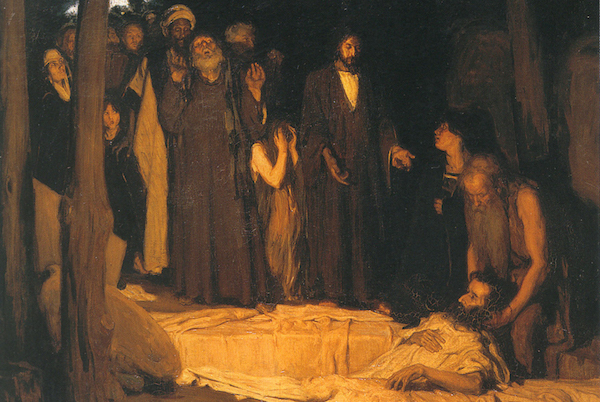
I have been working on an enjoyable Lenten project for my work at Faith ND called Journey Through Lent with Art. My editor Josh Noem and I have selected works of art depicting the upcoming Sunday Gospel for Lent and paired them with audio reflections we have crafted. For Holy Week and Easter Week, we have prepared art and reflections for each day's gospel. Click the link above to see the entire campaign.




Monday, December 25, 2017
Christmas Day Reflection
Here is a reflection I wrote for the Notre Dame Alumni Association's Daily Gospel Reflection, located at faith.nd.edu.
Gospel: The Nativity of the Lord
Luke 2:1-14
In those days a decree went out from Emperor Augustus that all the world should be registered. This was the first registration and was taken while Quirinius was governor of Syria. All went to their own towns to be registered.
Joseph also went from the town of Nazareth in Galilee to Judea, to the city of David called Bethlehem, because he was descended from the house and family of David.
He went to be registered with Mary, to whom he was engaged and who was expecting a child. While they were there, the time came for her to deliver her child. And she gave birth to her firstborn son and wrapped him in bands of cloth, and laid him in a manger, because there was no place for them in the inn.
In that region there were shepherds living in the fields, keeping watch over their flock by night. Then an angel of the Lord stood before them, and the glory of the Lord shone around them, and they were terrified.
But the angel said to them, “Do not be afraid; for see—I am bringing you good news of great joy for all the people: to you is born this day in the city of David a Savior, who is the Messiah, the Lord. This will be a sign for you: you will find a child wrapped in bands of cloth and lying in a manger.”
And suddenly there was with the angel a multitude of the heavenly host, praising God and saying, “Glory to God in the highest heaven, and on earth peace among those whom he favors!”
Reflection
During the summer after my first year at Notre Dame, I participated in a summer service project, serving at a homeless shelter in downtown Denver. While many of the residents there had checked into the shelter for a determined period of time, one area of the building was a large room where the "overflow" guests stayed. These were people who simply needed shelter for the night, possibly because of the weather or the transient nature of their lives at the moment. Each night, the staff would count people at lights-out, making sure there was sufficient room for everyone. Some nights, people faced the same plight as the Holy Family—turned away due to insufficient space.
Today's Christmas Gospel, complete with the details of a very inconveniently timed census and an overcrowded inn, caused me to remember my time in Denver. It is not always clear who counts in our society today and how we make room for others in our lives. Examples race through my mind: a peacefully and miraculously developing baby in the womb, seen only by the ultrasound machine; the sun-worn migrant worker, fighting weariness and hardship to feed his family; the disheveled addict, sleeping in a heap of belongings under an overpass; the weary streetwalker, trafficked and trapped in a silent hell; the frightened victims of an endless war whose ghostly faces show the weight of their worry. Who counts, and how can we make room?
Of course, Jesus comes to show us that everyone counts—from the simple shepherd to the learned scholar—and in God’s house, there is room for everyone who desires a place. What a powerful message contained in a poor, humble baby. This holy and divine child, who takes on all our loneliness, sin, and death, arrives to save us and give us lasting hope. Jesus does not come to redeem only a few. He comes for all, communicating God’s lasting desire to incorporate each of us in the final tally of those eternally happy in the many rooms of heaven.
O come, let us adore him!
Monday, November 20, 2017
The Third Luminous Mystery: The Proclamation of the Kingdom
The following is the final of twenty monthly reflections about the Mysteries of the Rosary as they relate to family life. The mysteries will not be necessarily chronological but presented as they interact with the liturgical year.
This month’s Rosary mystery, The Proclamation of the Kingdom, is a bit obscure because it does not have an image of an event readily attached to it. I suppose we could conjure a scene in our minds of Jesus teaching his followers, but that is about it. What we are left to do is think of many images that represent the coming of God’s Kingdom that is both underway here on earth and something we hope for in heaven. Of course, with this week containing Thanksgiving, I thought of the picture of the many preparations that are underway in homes across the country as another sort of coming is on the horizon: the coming of family.Cleaning the house, putting out the best dishes, preparing special foods, and a variety of other activities fill this week. All of it is geared toward a happy and successful gathering, but as many of us know, all the preparation does little to help if some kind of rift or tension exists within the family. Those sorts of problems take much more work over a prolonged period of time for wounds to heal.
Preparing for the coming of the kingdom requires an extended effort as well. We often speak about it as an “already but not yet” reality, and what we mean is that certain elements of the kingdom were established on earth in Jesus’ lifetime and exist with us still, but other elements still have to be brought forth in each generation. We are part of both a legacy and a future, and we have the opportunity to help the kingdom grow or diminish in influence on earth by how we live.
This month, we have already celebrated All Saints’ Day and prayed for our beloved dead on All Souls’ Day. Our common and often our personal pasts are filled with exemplary people who have made the kingdom alive and well in our lives. We strive to be part of this legacy of faith, passing on the Good News to the next generation and helping each other to prepare for what is to come.
We know all too well, though, that each of us has some area in our lives that could be better prepared for the kingdom’s coming. Perhaps a damaged relationship, a bad habit, or a nagging grudge keep us from being fully ready. While we are in this life, we still have a chance to seek and offer forgiveness, to show greater charity, and to give better witness to what we believe to be true in our hearts. As we hear about the end times in the readings at the end of our liturgical year, we have another reminder about the opportunity in front of us. Perhaps even during this holiday season, we can take some important steps with our loved ones. May we seize this moment to do so, preparing our hearts for the moment when we are fully taken up into the Kingdom of God!
Monday, August 28, 2017
The Fifth Glorious Mystery: The Crowning of Mary as Queen of Heaven
The following is the nineteenth of twenty monthly reflections about the Mysteries of the Rosary as they relate to family life. The mysteries will not be necessarily chronological but presented as they interact with the liturgical year.
This month, we consider the final Glorious Mystery as Mary is crowned Queen of Heaven. This is the culmination of all we have come to know and believe about Mary: her Immaculate Conception, her “yes” to God’s request to be Jesus’ mother, the sorrows she endured in life, and her Assumption into heaven. All of this leads us to what must have been a blessed and wondrous reception into heaven. The challenge for us is to understand how meditating upon this mystery can enhance our life of faith.
Monday, July 24, 2017
The Fifth Joyful Mystery: The Finding in the Temple
The following is the eighteenth of twenty monthly reflections about the Mysteries of the Rosary as they relate to family life. The mysteries will not be necessarily chronological but presented as they interact with the liturgical year.
Mary, of course, shares a similar experience in this month’s Rosary mystery, The Finding in the Temple. As can sometimes happen when large groups get together, Joseph and Mary assume Jesus is with another caravan member on the return trek from Jerusalem following the Passover celebration. Upon discovering he is missing, they quickly make their way back to Jerusalem. They search for their son for three agonizing days until finally finding him in the Temple, curiously conversing with the religious leaders there.
What happens next is quite interesting. Mary, both relieved and frustrated with Jesus, questions him why he would do such a thing. Jesus answers, “Why were you looking for me? Did you not know that I must be in my Father’s house?” While it is tempting to dismiss this as a smart aleck remark from a pre-teen boy, there is something much more significant going on here. Even though Jesus is many years away from embarking on his public ministry, we see that, in his human nature, Jesus is beginning to understand his mission. While Mary and Joseph do not understand what he means at the time, it will later become apparent to them.
This whole scene reminds me of a common exchange that happens throughout the development of a child. Parents tend to want to hold on to children, to push pause on life and enjoy young children for as long as possible. Children, on the other hand, are often eager to grow up, experience new freedoms, and make their mark on life. This tension can produce some tears when milestones of graduations, moving to a new city, and making vocational commitments arise.
When feeling this way as parents, I think it is important to remind ourselves of God’s plan for parenthood. Children are gifts, given freely by God, and they come with tremendous responsibilities. Not only do we need to care for their basic necessities, it is also our job to ensure they discover God’s plan for them and eventually help them to live forever in heaven. Taking this long view, we realize that we do not own our children. Rather, we shepherd and shape them for a time and then allow them to flourish in the ways God has planned.
Naturally, this is easier said than done. My wife and I constantly have older parents reminding us to cherish the time we have with our young family, and I am sure there will be emotional moments along the way where we will have to retreat to the comfort of home videos to relive these days. Taking the example of Mary and Joseph, we can trust that our children are in God’s hands. Even when we cannot understand everything that happens in life, we believe in a God who loves and cares for every single person unconditionally and who wants nothing more than to bring all of us home.
Tuesday, June 20, 2017
The Second Sorrowful Mystery: The Scourging at the Pillar
The following is the seventeenth of twenty
monthly reflections about the Mysteries of the Rosary as they relate to family
life. The mysteries will not be
necessarily chronological but presented as they interact with the liturgical
year.
In the case of childhood, punishment is usually justified by poor or sinful behavior, but in this month’s Rosary mystery, we have a situation of an innocent man being punished. Jesus is there, having done nothing wrong, and yet he endures some of the cruelest punishment imaginable for our sake. It is amazing to consider the strength of his will to go through with something as painful as a scourging, knowing that all these events would eventually lead to his bodily death.
What is our response to the realization of such self-sacrificial love? We can only consider the enormity of Christ’s gift every so often, and it can become easy to take it for granted. Even the words that we use to describe Jesus’ punishment and death do not really do justice to the reality of what they were. The Romans had nearly perfected methods of torture meant to produce tremendous pain while leaving subjects alive for prolonged periods. A medical description of what actually happened during a scourging or crucifixion like Jesus’ is not for the faint of heart. No matter what, to prayerfully meditate upon the depth of Jesus’ sacrifice is a fruitful exercise for all of us.
When we do consider this well and come to a place of gratitude, another curious thing happens in our relationship with God. Instead of living in fear of a punishing God, we begin to flee from our sinful past and inclinations and become motivated by love to do what is right. It is actually a sign of a somewhat immature faith when we only act out of fear. Our goal is to see our sins as violations of a relationship more sacred than any other. We are disappointed with ourselves when we fail in that regard, and we become quick to seek reconciliation when we have done wrong.
A similar transformation happens during childhood as we mature in our relationship with our parents. Those experiences and lessons can guide the healthy transition in our lives of faith. Grateful for the love of God as shown by Jesus in his suffering and death, we find ourselves seeking to show that love in return by offering ourselves in sacrificial love to others. Rather than being afraid to make a wrong move, we live in the freedom of a life infused by God’s will and guidance.
What is our response to the realization of such self-sacrificial love? We can only consider the enormity of Christ’s gift every so often, and it can become easy to take it for granted. Even the words that we use to describe Jesus’ punishment and death do not really do justice to the reality of what they were. The Romans had nearly perfected methods of torture meant to produce tremendous pain while leaving subjects alive for prolonged periods. A medical description of what actually happened during a scourging or crucifixion like Jesus’ is not for the faint of heart. No matter what, to prayerfully meditate upon the depth of Jesus’ sacrifice is a fruitful exercise for all of us.
When we do consider this well and come to a place of gratitude, another curious thing happens in our relationship with God. Instead of living in fear of a punishing God, we begin to flee from our sinful past and inclinations and become motivated by love to do what is right. It is actually a sign of a somewhat immature faith when we only act out of fear. Our goal is to see our sins as violations of a relationship more sacred than any other. We are disappointed with ourselves when we fail in that regard, and we become quick to seek reconciliation when we have done wrong.
A similar transformation happens during childhood as we mature in our relationship with our parents. Those experiences and lessons can guide the healthy transition in our lives of faith. Grateful for the love of God as shown by Jesus in his suffering and death, we find ourselves seeking to show that love in return by offering ourselves in sacrificial love to others. Rather than being afraid to make a wrong move, we live in the freedom of a life infused by God’s will and guidance.
Monday, May 22, 2017
The Second Glorious Mystery: The Ascension
The following is the sixteenth of twenty monthly reflections about the Mysteries of the Rosary as they relate to family life. The mysteries will not be necessarily chronological but presented as they interact with the liturgical year.
Instead of watching the fireworks themselves, I often find myself turning around and watching their reflection in the eyes of my children. The sparks of light and flashes of color have a unique and distinct beauty when seen in those dilated pupils. I do not even miss witnessing the original show as I get to see the joy and wonder in those angelic faces, transfixed by the sights in the sky above them.
I imagine a similar scene in this month’s Rosary mystery, the Ascension. Described in Acts 1:6-12, Jesus’ followers have been reveling in his resurrected return as he has repeatedly proven the reality of his new life. And then, rather suddenly, he is taken from them. I see them there in my mind’s eye, with their gaze fixed on the heavens that have just received the Lord. Perhaps they are imagining all that had taken place in the recent past and still trying to make sense of it. With Jesus’ second departure, the first being his death, they are probably feeling once again the uncertainty of what to do or where to go next. Jesus, in his life, teachings, miracles, and passion, has held their attention for so long, they do not yet know where to look now.
It is during this time of introspection and immobility that “two men dressed in white,” presumably angels, inquire as to why the group is staring at the sky. The messengers assure those gathered that Jesus will someday return to Earth in a comparable manner. It is a message of hope in preparation for the coming of the Holy Spirt.
This whole story prompts certain questions for me. Most prominently, what holds our attention in such a way now? We often seem preoccupied with our smartphones, social media, work, material possessions, and the like. Though advances in technology and work are supposed to have made life easier, we cannot often find a way to give our time to worthier endeavors such as quality time with family and friends, silent prayer or adoration, and scriptural or spiritual reading. We give our attention to what holds the most value for us, and taking time to reassess is always a worthwhile endeavor.
The Ascension is a good reminder of what is actually of great value and of where we hope to join Jesus someday. Reaffirming our commitment to our faith will ensure that we are ready for our own moment of transition from this world to the next. As the men in white reminded the Apostles, Jesus will come again. Will we be watching for him?
Monday, April 17, 2017
The First Sorrowful Mystery: The Agony in the Garden
The following is the fifteenth of twenty monthly reflections about the Mysteries of the Rosary as they relate to family life. The mysteries will not be necessarily chronological but presented as they interact with the liturgical year.
A short while after Bishop Kevin Rhoades anointed the altar with, as advertised, copious amounts of sacred chrism, several women of our parish approached the newly sacred table with white cloths to dry it before the Liturgy of the Eucharist. I found myself mesmerized by their actions, made with such grace, gentleness, reverence, and care. It reminded me of a family preparing for a most important banquet or a mother tenderly wiping the forehead of a feverish child. All movements were filled with purpose and fueled by love. It was a sight that summoned emotion and memory for me more than any other that day.
As we just concluded Holy Week and the Sacred Triduum, many similar scenes played out in our minds while we listened to the scriptures and walked the Way of the Cross. We heard of Mary, sister of Lazarus, anointing Jesus at Bethany as if preparing him for burial. We remembered Veronica’s and Simon’s humble service and the compassionate weeping of Jerusalem’s women. We visualized our Blessed Mother and the beloved disciple as they stood at the foot of the cross during Christ’s final breaths. In all these instances, there was a tenderness and grace present to the Lord during a time of great need.
However, in another moment of this most sacred story, there was no human tenderness to assist Jesus, and that is during the Agony in the Garden. Jesus implored Peter, James, and John to watch and pray, and he went off to pray with astounding humanity and intensity. Instead of heeding Jesus’ instructions or caring for a clearly distressed man, the disciples fell asleep. It is a time where Jesus could have clearly used some human support, but instead, he begins to feel the abandonment that would reoccur in the coming final hours.
While we hope to have many people around us in our families and friends to support us, each one of us goes through our own agonies in life, times when we feel abandoned by those who love us, times when we long for help and find little. When these happen, we find ourselves distressed and wearied in the same way that the human Jesus was, but we also find inspiration in his perseverance. He did not abandon his vocation and calling, and he eventually found some human compassion as the road to Calvary continued.
Even after Jesus’ death, people cared for him enough to take his body down from the cross and prepare it for burial. I imagine a group of people surrounding him, just as the women of our parish surrounded our new altar, gently wiping and cleaning something so sacred. May we be inspired to perform such small acts of kindness for others as well. Though they may seem insignificant in the whole of life, they might be the exact thing that someone needs in a trying time and can remind people that we ultimately are a people of Easter hope. After all, of all the important people and happenings of the Dedication Mass, it was the humble service of holy women with what could have seemed an insignificant task that most helped my heart soar with gratitude for our new church and the people of our parish.
As we just concluded Holy Week and the Sacred Triduum, many similar scenes played out in our minds while we listened to the scriptures and walked the Way of the Cross. We heard of Mary, sister of Lazarus, anointing Jesus at Bethany as if preparing him for burial. We remembered Veronica’s and Simon’s humble service and the compassionate weeping of Jerusalem’s women. We visualized our Blessed Mother and the beloved disciple as they stood at the foot of the cross during Christ’s final breaths. In all these instances, there was a tenderness and grace present to the Lord during a time of great need.
However, in another moment of this most sacred story, there was no human tenderness to assist Jesus, and that is during the Agony in the Garden. Jesus implored Peter, James, and John to watch and pray, and he went off to pray with astounding humanity and intensity. Instead of heeding Jesus’ instructions or caring for a clearly distressed man, the disciples fell asleep. It is a time where Jesus could have clearly used some human support, but instead, he begins to feel the abandonment that would reoccur in the coming final hours.
While we hope to have many people around us in our families and friends to support us, each one of us goes through our own agonies in life, times when we feel abandoned by those who love us, times when we long for help and find little. When these happen, we find ourselves distressed and wearied in the same way that the human Jesus was, but we also find inspiration in his perseverance. He did not abandon his vocation and calling, and he eventually found some human compassion as the road to Calvary continued.
Even after Jesus’ death, people cared for him enough to take his body down from the cross and prepare it for burial. I imagine a group of people surrounding him, just as the women of our parish surrounded our new altar, gently wiping and cleaning something so sacred. May we be inspired to perform such small acts of kindness for others as well. Though they may seem insignificant in the whole of life, they might be the exact thing that someone needs in a trying time and can remind people that we ultimately are a people of Easter hope. After all, of all the important people and happenings of the Dedication Mass, it was the humble service of holy women with what could have seemed an insignificant task that most helped my heart soar with gratitude for our new church and the people of our parish.
Monday, March 13, 2017
The First Joyful Mystery: The Annunciation
The following is the fourteenth of twenty
monthly reflections about the Mysteries of the Rosary as they relate to family
life. The mysteries will not be
necessarily chronological but presented as they interact with the liturgical
year.
Since we are soon to celebrate the Solemnity of the Annunciation, I thought it was a perfect fit for our rosary mystery this month, and it holds a great deal of meaning for the building of our new church at St. Pius X. So much of this story is instructive. The angel Gabriel comes to Mary, a young, betrothed virgin, and proclaims that she is to have a child. Bewildered, her first question is, “How can this be?” Gabriel gives the explanation of the Holy Spirit’s involvement, which, quite frankly, would have produced some follow-up questions for me! But Mary, model of faith in God, does not ask more questions. Instead, she gives one of the most profound statements in all of Scripture and even human history, “Behold, I am the handmaid of the Lord. May it be done to me according to your word.”
Notice that she does not ask, “How much will this cost me?” In truth, it was going to cost her a great deal, probably more than she could have ever imagined as a young maiden. Her heart would be pierced with sorrows throughout her days, and yet she always trusted that God’s grace was working through her to produce something greater than she could have ever done alone.
We have such moments in life where we have a decision of great significance before us. I think of my wedding day where my wife and I made vows to each other and to God without knowing at all what those promises would truly ask of us as it came to living our married life. It may have scared us away to know everything all at once! Or each time that we have been open to life and accepted children into our family, we had no idea the total cost or what the future would hold. Finally, I think of our parish family, as we stand upon the precipice of opening a new church building that is an answer to the Holy Spirit’s movement in our community. While we can put a dollar amount on the project, behind that are tremendous examples of generosity and sacrifice, even beyond the financial, that were put forth without knowing exactly how this would turn out.
Like Mary, we strive to get the point of praying that God’s will be done. This does not, of course, mean that we do not exercise prudence in taking vows, having children, or building churches. It is indeed very biblical to plan to ensure that enough resources exist to accomplish any of these undertakings. But if we get hung up on the cost, we would never have the courage and conviction to do anything worthwhile.
Here is the amazing thing. It is our “yes,” mingled with God’s transformative grace, that produces things exceeding our wildest dreams. Marriages that last 50 years or more, children bringing tremendous joy despite their many needs, and churches rising from the ground in the face of significant secular headwinds do not simply happen by chance. These are labors of love that have cooperated with and placed complete reliance on God’s most holy will. They are examples of great witness that will last for many, many years to come. They boldly proclaim that this was a group of people who served God and neighbor, who trusted that their sacrifices placed at God’s altar could grow to unimaginable heights. This a was family, who, when faced with a substantial challenge and stood at a crossroads, followed the example of the Blessed Virgin and said, “Let your will be done!”
Monday, February 20, 2017
The Fourth Joyful Mystery: The Presentation in the Temple
The following is the thirteenth of twenty monthly reflections about the Mysteries of the Rosary as they relate to family life. The mysteries will not be necessarily chronological but presented as they interact with the liturgical year.
When a baby is born, there are various presentations that take place. One of my favorites as a father has been presenting my newborn children to their mother Stephanie for the first time. She has, after all, been doing all the work! But when I have placed our babies cheek to cheek with their mother, any difficulty has been momentarily forgotten, and I have had one of the rare chances in life to witness pure, uninterrupted joy. However, the presentation I most closely associate with this month’s rosary mystery is when my wife and I have brought our children to baptism. Like Joseph and Mary, we have fulfilled a hope and expectation of the religious heritage we wish to pass along as a precious gift to our children. Whenever we have done so, my mind has inevitably drifted to my children’s and my future as well. How will we shape them to be holy people? Will we be as proud to present them to God in eternal life as we were on their baptismal day? And finally, am I directing my own life in a way that others would happily present on the day of salvation?
The Fourth Joyful Mystery: The Presentation in the Temple
Monday, January 30, 2017
The First Luminous Mystery: The Baptism in the Jordan
The following is the twelfth of twenty
monthly reflections about the Mysteries of the Rosary as they relate to family
life. The mysteries will not be
necessarily chronological but presented as they interact with the liturgical
year.
My
wife Stephanie and I have a running joke between us. I ask her if there is anywhere she would like
to go on vacation, and she quickly answers, “Somewhere with a beach.” Of course, we have found that there is a
difference between the idyllic beach scene in her mind and the reality of being
by water with young kids in tow.
Usually, it means that Stephanie is managing “the bag,” filled with
enough supplies to guide us through any number of misadventures that could be
in store, and while she covers home base on the beach, I am out in the water
with my aspiring but not yet functioning swimmers. Whenever someone approaches the water and is
uncertain about swimming ability or the unseen terrain, our instinctive
reaction is to hold out our hands in support, and this image came to me as I
reflected on our rosary mystery this month.
A
myriad of reasons has emerged over the millennia as each generation considers
this event, but I would like to highlight two.
The first is that Jesus is showing us the way to follow. After he emerges from the baptismal waters,
we can imagine that Jesus has figuratively invited each of us to follow suit,
holding out his hands as we enter the water ourselves and become members of the
Body of Christ. It helps to follow
someone who has gone before us.
The
second reason that I find important is that Jesus is already prefiguring his
death on the cross. The interplay of
water as both a cleansing agent and source of danger and death is present
here. Baptism not only washes away our
sins but also asks us to die to our former selves. Those hands of support are essential to keep
the fear of drowning at bay, but the interesting thing about Jesus is that he
invites us down into the water to, in a way, drown our old selves and emerge as
a new person, freed from sin. The reason
that baptism is effective in this way is because of Christ’s death on the cross. By submitting to baptism in the Jordan, Jesus
shows that he is willing to die for us and will soon enough do so.
Just as Jesus’
life does not end with death but resurrection, our baptism does not end with
death but moves to rebirth and adoption.
Because Jesus first shows us the way, we have the courage to enter the
water ourselves, knowing that we will never be the same and changed for the
better. Even if we cannot remember the
event of our baptism, we continue to affirm its meaning
as we sign ourselves with holy water, renew our baptismal promises during
Easter, and continue to follow Jesus in the way that we live our lives. Let us then again reach out and take Jesus’
hands. We know that in following him, we
will end up where our hearts most desire to go.
Monday, December 19, 2016
The Third Joyful Mystery: The Nativity of our Lord
The following is the eleventh of twenty
monthly reflections about the Mysteries of the Rosary as they relate to family
life. The mysteries will not be
necessarily chronological but presented as they interact with the liturgical
year.
This
particular Advent is memorable to me as we wait for the Christ Child because my
wife Stephanie and I also await the birth of our fourth child this spring. It is something that our other children
greatly anticipate as well and talk about frequently. Recently, we braved a local restaurant for a
public meal with our crew, and my five-year-old Benjamin said something that caught
me by surprise. As we sat at the table,
he announced without discussion or prompting, “We have six people at our table
now.” We questioned him further about
what he meant, and he explained, “There is Nicholas, Mark, Benjamin, Daddy,
Mommy, and the new baby.” I marveled at
the beauty and simplicity of his statement and remarked to my wife that it is
amazing what children could sometimes teach the world. I certainly have learned a great deal from
each of my children and have no doubt that our newest addition will do the
same. It gives me pause as I reflect on
our mystery this month of Jesus’ birth.
As we celebrate his coming this year, what will this child teach us?
First,
many elements of his birth are instructive for our meditation. The humility of the arrival of the King of
Kings is remarkable in many ways. He
comes as a little baby, seemingly insignificant enough to be born in a stable
and to have a manger as his first resting place. Any baby seems to draw in other people, and a
baby born in this manner would certainly have no barriers, social or otherwise,
to a breadth of human visitors. This is
confirmed as both common shepherds and educated, wealthy astronomers approach
him. This baby comes to all people, of
every heritage and way of life, offering us all what no other child could.
A
second important aspect of the Lord’s Nativity is that he comes to share in our
hardships. Think of the many challenging
events of Jesus’ early life: a crisis pregnancy, temporarily homelessness, and forced
emigration due to violence. This is not
the sort of peaceful arrival we would expect for a divine being coming to visit
his people and to actually become one of them.
Again, God defies conventional wisdom and makes a clear point here. Even in his birth, Christ begins to bear the
weight of our humanity and the cost of our sinfulness.
This
leads us to our final lesson from Christ’s birth: Jesus comes with a
purpose. It is tempting to sit with the
peace of Christmas and compartmentalize it from the rest of Jesus’ life. However, we know that Bethlehem and Calvary
are inextricably linked, and the cross and empty tomb are the culmination of
this little baby’s story. We celebrate
his birth not only because of the events that immediately surround it but also
because of what will follow. This child
will eventually grow to become the savior of all humanity, and his birth is an
essential event as God’s salvific plan comes to fruition.
As we gather with family and friends this season in our homes and churches, we do well to remember the true importance and meaning of our celebration. Our hearts must be open to the lessons Christ comes to teach us, and we will then be like those who celebrated and told a weary world of this sign of hope. With gratitude and acceptance we joyfully pray, “Come, Lord Jesus!”
As we gather with family and friends this season in our homes and churches, we do well to remember the true importance and meaning of our celebration. Our hearts must be open to the lessons Christ comes to teach us, and we will then be like those who celebrated and told a weary world of this sign of hope. With gratitude and acceptance we joyfully pray, “Come, Lord Jesus!”
Monday, November 21, 2016
The Third Sorrowful Mystery: The Crowning with Thorns
The following is the tenth of twenty monthly
reflections about the Mysteries of the Rosary as they relate to family
life. The mysteries will not be
necessarily chronological but presented as they interact with the liturgical
year.
As
a parent of multiple children, I am well aware of the challenges of encouraging
good behavior during Mass. It was no
different during my own childhood. My
older brother and I went through a phase, even after we had passed the age of
crying and outbursts, when we were less than charitable towards each
other. This included jostling for
position in the pew each time we sat down, “accidentally” knocking someone’s
songbook to the ground, and my brother’s personal favorite, an extra firm grip
if we happened to be holding hands during the Lord’s Prayer. No other time in my life have I prayed the
line “deliver us from evil” with such gusto!
One particular day, as my family climbed back into the car, my dad said
to my mom, “I think we need to have a surprise party when we get home.” A surprise party? I thought that perhaps my brother and I had
gotten so good at our antics that my dad had not noticed us this week and
wanted to have a party for our seemingly good behavior. Well, the surprise was on me.
Instead of a day
filled with games, cake, and ice cream, our “surprise” was to spend time at
home in prayer equal to the time that we were misbehaving in Mass. Obviously, that particular lesson has
certainly stayed with me, and I was thinking about it this week during the
Feast of Christ the King and reflecting on our rosary mystery this month. God is a God of surprises, and it is jarring
to consider that Jesus, who we proclaim King of the Universe, first accepted a
crown of thorns. The Roman governmental
authority of the day meant it to be a source of pain and mockery, but Jesus
transforms it and all the symbols of his Passion as something that we now
reflect upon and revere. It is also
telling that the kingship of Christ endures while the Roman reign has long
ended. Indeed, any form of human
government is ultimately subject to divine authority.
Leading up to
and during his walk to Calvary, Jesus surprised many people, and they responded
in various ways. His disciples were
caught off-guard and hesitant when their master began to perform a servant’s
work and wash their feet. Judas and
Peter heard their deeds foretold to them, but instead of accepting Jesus’
warnings, they carried them out. Pontius
Pilate and especially his wife seemed to struggle greatly with the idea of prosecuting
what seemed to be an innocent man, but their hesitation was not enough to put a
stop to the injustice. Simon of Cyrene
was pressed into service unexpectedly as Jesus labored heavily under the cross,
and he accepted his task well. The Good
Thief rebuked the other man abusing Jesus from the cross, and he was surprised
to accept Jesus’ mercy at the hour of death.
How
open are we to the unexpected movements of God in our lives? Do we accept such surprises with an open or
hardened heart? Sometimes God’s will
aligns with our plans, but other times it can be completely the opposite of
what thought would happen. I have heard
more than one priest or vowed religious claim that the most difficult vow to
live is not chastity but obedience. Following
Jesus means that sometimes, like on the road to Calvary, we will have to go
where we do not want and do what we would rather not. Yet, it is precisely Jesus’ example that
gives us the promise of something greater on the other side of our earthly
suffering.
My own sense is that the only way I have been able to be truly receptive to God’s movement in my life is by cultivating a strong life of prayer. In times where I have not achieved this, God’s surprises have had the power to blow me far off-course, but in times where prayer has been consistent, things come more as a gentle breeze redirecting my efforts towards a different goal. Of course, like a younger brother having the life squeezed out of his hand, nothing spurs us to prayer faster than sheer desperation!
My own sense is that the only way I have been able to be truly receptive to God’s movement in my life is by cultivating a strong life of prayer. In times where I have not achieved this, God’s surprises have had the power to blow me far off-course, but in times where prayer has been consistent, things come more as a gentle breeze redirecting my efforts towards a different goal. Of course, like a younger brother having the life squeezed out of his hand, nothing spurs us to prayer faster than sheer desperation!
Monday, October 17, 2016
The Second Joyful Mystery: The Visitation
The following is the ninth of twenty monthly
reflections about the Mysteries of the Rosary as they relate to family
life. The mysteries will not be
necessarily chronological but presented as they interact with the liturgical
year.
One
of the greatest remedies for a messy house that I know is to have
visitors. In my childhood home and
current one, nothing lights a fire under the cleaning crew more than people
coming to visit. This, of course, is a
natural human response. We want to
welcome our guests well to a presentable environment, and we cannot claim that
the demands of family life do not sometimes get the better of our ability to
keep our space organized. However, even
when we clean our homes, there is usually a spot or two that remain in disarray
but mercifully out of the sight of guests.
Whether under a bed, in a closet, or in an entire room with the door
strategically closed, we all know the go-to place when we have run short on
time preparing for the guests to arrive.
In our rosary mystery this month, we do not hear about the cleanliness
of anyone’s home, but we find out a great deal about the guests who come to
visit.
The
Visitation is the story of Mary going to visit her cousin Elizabeth while they
are both with child. Both pregnancies
are quite unlikely due to Elizabeth’s age and Mary’s virginity, yet the women
have welcomed the visitors inside their bodies and have come together to share
their stories and prepare for the new arrivals.
Elizabeth and her baby John give us quite a bit of insight about Mary
and her child Jesus. Exclaiming that
Mary and her baby are blessed above all others, Elizabeth also tells Mary that
John leapt for joy inside of her at the sound of Mary’s voice. Indeed, guests of great honor have arrived.
Our
lives of faith are also about welcoming the Guest into our hearts and
lives. I love the image of Jesus knocking
at a door with no exterior handle because the door to our hearts is ours to
open from the inside. God still offers
us this freedom even when such an important guest is waiting. Because of our attraction to sin, we are not
always ready to welcome Christ as a guest.
Distraction and untidy spiritual lives leave us bereft of the gifts that
he offers us with his presence. Perhaps
our relationship with God is in good order overall, but there may be that
hiding spot or two that could use our attention. Just as my parents claimed about housework, a
little effort in our spiritual lives each day makes the task of preparing for
our visitor more manageable. However,
unlike a physical house that can only be so clean, there is no limit to the
graces we can receive by constantly attending to our spiritual house.
As
we approach the end of the liturgical year, we will begin to think more about
death, the Second Coming, and our lack of knowledge about the timing of these
events. This is not meant to frighten us
but rather to remind us of our limited time on earth and our need to consider
the things of lasting value. It is
important that we ready ourselves each day so that when our final day arrives, whether
unexpectedly or after a long life, we are ready to welcome Jesus and accept his
invitation to live in his Father’s eternal home.
Subscribe to:
Posts (Atom)